Looking for a beginner-friendly crochet texture that looks intricate, creates a reversible pebbled fabric, and never curls at the edges? Meet the beloved crochet lemon peel stitch! Also known as the griddle stitch, this simple one-row repeat alternates basic single crochet and double crochet stitches to create a subtle, modern dimpled texture reminiscent of real citrus peel.
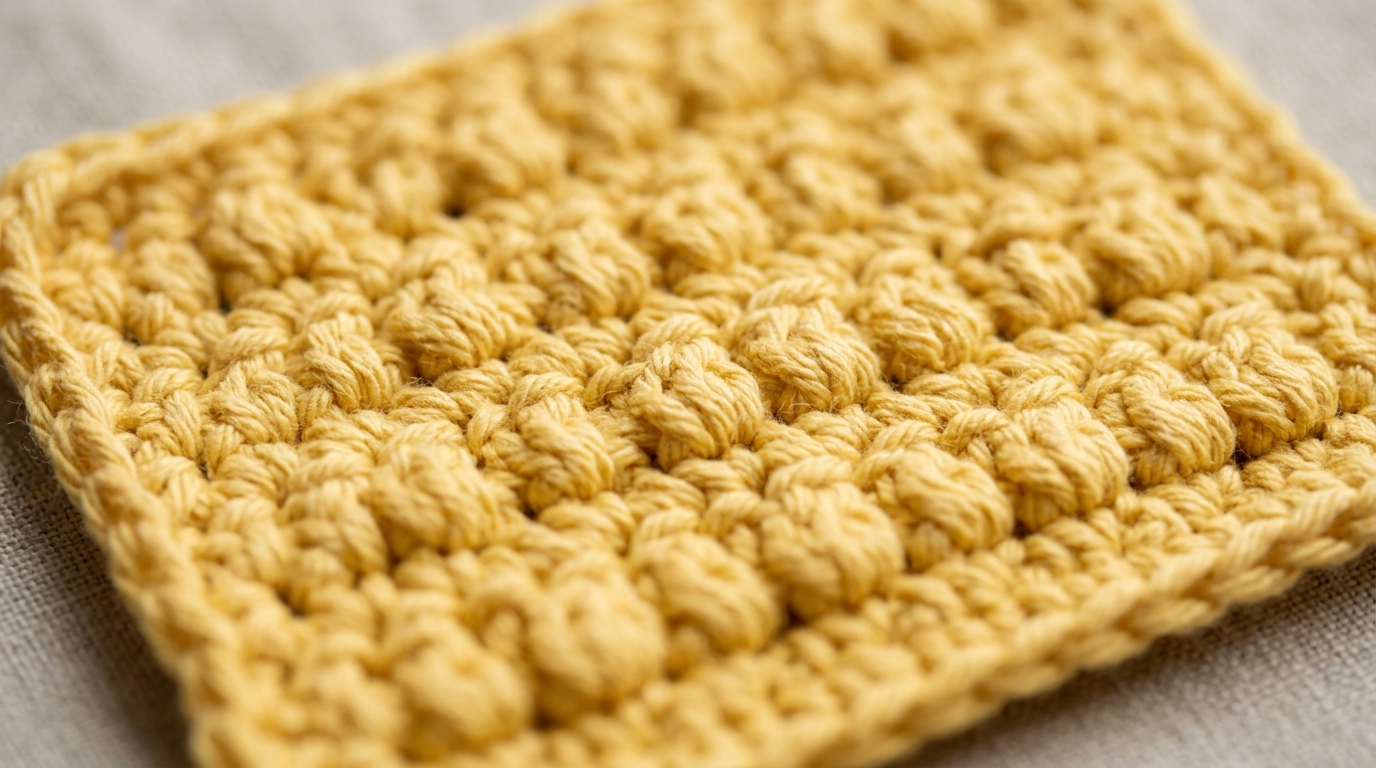
If you have ever been frustrated by solid single crochet feeling too stiff or double crochet leaving large breezy gaps, the lemon peel stitch is your ideal sweet spot. The short single crochet pulls the tall double crochet downward, locking the stitches into a dense, squishy fabric with phenomenal structural integrity and zero curling. Best of all, because it is 100% reversible, both sides look identical—making it the gold standard stitch for dishcloths, heirloom baby blankets, cozy scarves, and modern kitchen accessories.
Why You’ll Love This Stitch
- Mindless One-Row Repeat: Once you establish the first row, you simply work a single crochet into every double crochet and a double crochet into every single crochet.
- 100% Reversible Fabric: Front and back are completely identical, with no awkward “wrong side” to hide on blankets or scarves.
- Completely Flat & Non-Curling: The alternating stitch heights balance tension naturally, keeping your swatch flat without edge rolling.
- Rich Tactile Texture: Provides an organic, understated pebble texture that looks sophisticated in both solid colors and subtle tweeds.
Materials & Hook Recommendations

- Yarn: Medium Worsted Weight (#4) or DK Weight (#3) yarn. Smooth, plied cotton yarns (like Paintbox Yarns Cotton Aran or Lily Sugar ‘n Cream) highlight the pebbled definition, while merino wool provides cozy warmth for apparel.
- Crochet Hook: US Size 7 (4.5 mm) or H-8 (5.0 mm). Going up one hook size from your yarn’s recommendation enhances drape and prevents the fabric from becoming overly stiff.
- Locking Stitch Markers: Helpful for marking the turning chain at the beginning of rows to keep edges straight.
- Tapestry Needle & Scissors: For weaving in ends cleanly and trimming yarn tails.
Crochet Abbreviations & Stitch Key
Written in standard US Crochet Terminology.
- Ch: Chain
- Sc: Single Crochet
- Dc: Double Crochet
- St(s): Stitch(es)
- Tch: Turning Chain
Stitch Multiples: The Lemon Peel Stitch is worked over an even number of chains (which yields an odd number of working stitches plus 1 turning chain).
Step-by-Step Lemon Peel Stitch Walkthrough

Work this quick practice swatch (21 stitches wide) to master the alternating cadence:
1. Foundation Row
Foundation Chain: Ch 22 (an even number).
Row 1: Sc in the 2nd ch from hook. *Dc in the next ch, sc in the next ch.* Repeat from * to * across the entire foundation chain, ending with a dc in the final chain. Ch 1, turn. (21 total sts: 11 sc and 10 dc)
2. The One-Row Repeat
Golden Rule of Lemon Peel: Always work the opposite stitch into the previous row. (Sc goes into Dc; Dc goes into Sc).
Row 2: Sc in the very first st (which is the top of the last dc from Row 1). *Dc in the next st (top of sc), sc in the next st (top of dc).* Repeat from * to * across to the end of the row, ending with a dc in the last sc. Ch 1, turn. (21 sts)
Rows 3 and beyond: Simply repeat Row 2 for the duration of your project! Because every row starts with a single crochet and ends with a double crochet, you never have to guess where you are in the pattern.
3 Pro Tips for Crisp, Straight Edges
1. The Ch-1 Does Not Count as a Stitch: When you finish each row, work a Ch 1 and turn. Do not skip the first stitch—work your first single crochet directly into that very first stitch under the turning chain. This creates clean, razor-straight side borders that never lean.
2. Always End on a Double Crochet: If you ever reach the end of a row and find yourself working a single crochet, you know you accidentally doubled up or skipped a stitch earlier. Checking that your final stitch is always a dc serves as a built-in error checker!
3. Keep Double Crochets Relaxed: Pull your double crochet loops up to their full natural height. Letting the double crochet bloom gives the fabric its signature plump, pebbled texture.
Best Projects for the Lemon Peel Stitch

- Farmhouse Kitchen Dishcloths: The raised texture provides gentle scrubbing power on dishes and countertops without scratching non-stick pans.
- Modern Reversible Blankets: Thick, cozy, and drape-friendly, the lemon peel stitch makes baby and throw blankets that look polished from both sides.
- Textured Cardigans & Sweaters: Provides the dense warmth of single crochet combined with the flexible stretch and drape of double crochet.
- Spa Washcloths & Hand Towels: The textured cotton pebbles gently exfoliate skin, making beautiful handmade spa gift sets.
Washing & Blocking Guidelines
- Blocking: Lemon peel fabric naturally lies flat, but a light steam block with pins will square your corners and emphasize the clean geometric grid.
- Laundering: Machine wash cold with similar colors. For cotton dishcloths, tumble dry on medium heat—the fabric will shrink slightly and become even thicker and softer!
Frequently Asked Questions
What is the difference between Lemon Peel and Suzette Stitch?
While both stitches use alternating single and double crochet, the Lemon Peel stitch alternates them across the row (1 sc, 1 dc, 1 sc, 1 dc). The Suzette stitch works [1 sc, 1 dc] together into the same stitch, then skips a stitch, creating a more diagonal, textured cluster.
Is the Lemon Peel Stitch a yarn eater?
Not at all! Because half of the stitches are standard double crochets, it consumes significantly less yarn than thermal or waffle stitch, and works up much faster than solid single crochet.
Can I work this stitch in the round?
Yes! When crocheting in the round (for beanies or cowl tubes), you must turn your work at the end of each round to maintain the alternating pebble texture.
Pin This Tutorial for Later
Want to keep this stitch in your crochet library? Save this pin to your Crochet Stitches & Tutorials board on Pinterest so you have it ready for your next project!