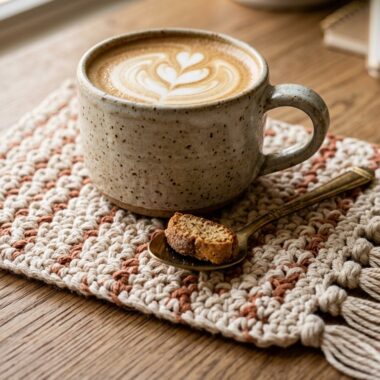
There is nothing quite as inviting as running your fingertips across a heavy, deeply textured crochet throw draped across an autumn armchair. While basic double crochet blankets can sometimes feel loose, airy, or visually repetitive, textured stitch patterns transform ordinary yarn into plush architectural fabric that traps cozy warmth and completely eliminates drafty gaps. Whether you are dreaming of a weighty winter bedspread or structured farmhouse throw pillows, mastering these 5 rich textured stitches will permanently elevate your home decor crochet repertoire.
Working textured stitches often intimidates crocheters who worry about complicated row counts or stiff, board-like fabric. However, by understanding the mechanics of front-post stitches, yarnovers, and loop placement, you can achieve luxurious dimensional depth while maintaining fluid drape and soft flexibility. Below is a comprehensive master guide breaking down the five most viral, satisfying textured stitches every blanket maker needs to know.
Why You’ll Love Textured Stitches
- Extra Thermal Warmth: Raised post stitches and clustered stitches produce double-thick density that traps body heat far better than standard flat rows.
- Reversible or Deep 3D Relief: These stitch patterns look spectacular under natural living room lighting, casting soft architectural shadows across your sofa.
- No Holes for Toes or Fingers: Dense interlocked structures ensure baby fingers and chilly toes never poke through stitch gaps.
- Remarkable Fabric Memory: Dimensional stitches maintain their crisp geometry and bounce even after dozens of washes and years of cozy cuddling.
Key Materials & Hook Pairing Guide

- Recommended Yarn: Worsted (#4) or Chunky (#5) weight yarn with excellent stitch definition (such as Lion Brand Wool-Ease, Heartland, or Paintbox Simply Aran). Avoid overly fuzzy novelty yarns or bouclé, which conceal intricate texture!
- Crochet Hook Sizing Tip: Always size up 0.5 mm to 1.0 mm larger than the yarn label recommends (e.g., use a 6.0 mm or 6.5 mm hook with worsted yarn). Sizing up ensures your blanket has soft, supple drape rather than stiff carpet-like rigidity.
- Locking Stitch Markers: Invaluable for keeping track of pattern repeats and maintaining perfectly straight edges across wide blanket foundations.
- Yarn Needle & Measuring Tape: For weaving ends deeply into dense post stitches and measuring swatches.
5 Master Textured Stitches Walkthrough
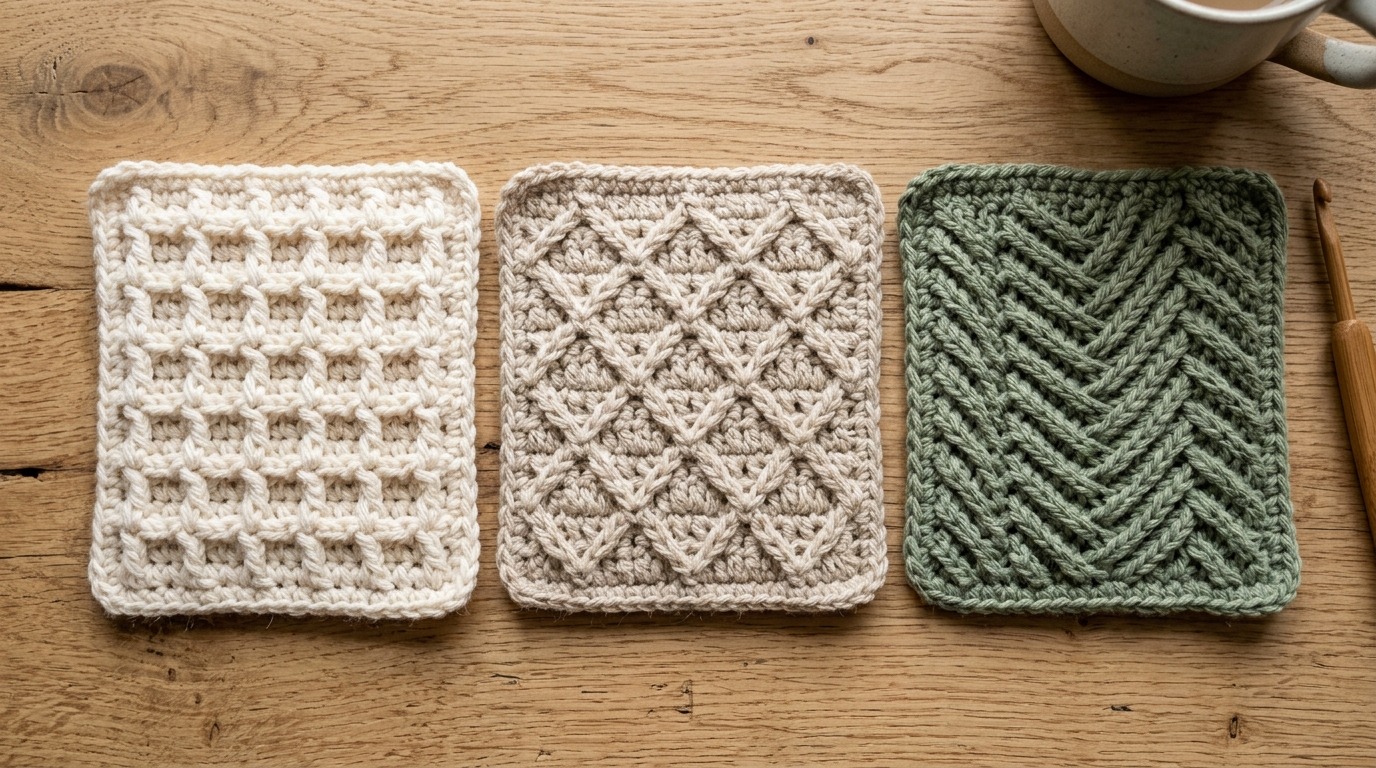
1. The Waffle Stitch (Gridlike Squish): Created using a 2-row repeat alternating regular double crochets with front post double crochets (fpdc). On the right side, work *1 dc, 2 fpdc* across. On the wrong side, work *1 fpdc, 2 dc* across. The result is a squishy, deep geometric honeycomb grid that is ultra-plush and deeply insulating.
2. The Diamond Trellis Stitch (Architectural Elegance): Uses elongated front post treble crochets worked two rows below, angled toward each other to form intersecting diamond crests. The background is simple single crochet, allowing the raised diamond lattice to float on top of the fabric like luxury upholstery.

3. The Herringbone Half Double Crochet (Modern Woven V-Lines): Worked by yarning over, inserting your hook, pulling up a loop, and immediately pulling that first loop through the second loop on your hook (like a slip stitch) before yarning over and pulling through the remaining two loops. This subtle tweak angles every stitch into a modern herringbone chevron.
4. The Basketweave Stitch (Timeless Farmhouse Weave): Formed by alternating blocks of 4 front post double crochets and 4 back post double crochets for 4 consecutive rows, then reversing the blocks. This produces an authentic woven wicker texture that looks stunning in neutral oatmeal, cream, and taupe tones.
3 Pro Tips for Perfect Results
1. Calculate Extra Yarn Yardage (The 25% Rule): Textured post stitches wrap around stitch stems rather than slipping through top loops, requiring approximately 20% to 30% more yarn than standard double crochet. Always buy an extra skein or two of the same dye lot when starting a textured blanket.
2. Keep Front Post Tension Relaxed: When drawing up the working loop for front post treble or double crochet stitches, pull the loop up to the height of your current working row before finishing the stitch. This prevents the stitch from cinching tightly and pulling your blanket inward.
3. Count Stitches at the End of Every Row: Textured repeats can make it easy to miss the very last turning stitch or accidentally double up at the beginning. Use a locking marker every 25 or 50 stitches on wide afghans to guarantee crisp, parallel edges.
Best Project Ideas & Styling Inspiration

- Chunky Living Room Throw: Work a 50×60-inch waffle stitch blanket in rich neutral cream or heathered charcoal for the ultimate movie-night blanket.
- Farmhouse Lumbar Accent Pillow: Crochet two basketweave or diamond trellis square panels, seam around a feather pillow insert, and enjoy high-end boutique decor.
- Heirloom Baby Afghan: The hole-free herringbone or moss stitch creates an exceptionally safe, snuggly crib blanket that stands up to daily washing.
- Modern Bed Runner: Drape a long textured band across the foot of a king or queen duvet to introduce tactile warmth and boutique hotel styling.
Care, Washing & Blocking Guidelines
- Blocking Technique: Wet blocking or gentle steam blocking opens up the stitch valleys and relaxes post stitches into pristine, symmetrical alignment. Never iron directly against post stitches, which flattens the 3D relief!
- Washing Instructions: Machine wash on gentle cycle inside a large zippered laundry bag with mild wool or fabric wash in cool water.
- Drying Method: Lay completely flat across a sweater drying rack or dry towels. Heavy textured blankets should never be hung on a clothesline, as the weight of wet yarn will distort the stitch rows.
Frequently Asked Questions
Which textured crochet stitch uses the least yarn?
The Herringbone Half Double Crochet and Moss (Linen) Stitch are the most economical textured stitches, consuming nearly the same yardage as basic stitches while still delivering gorgeous tactile texture.
Are textured stitches reversible?
Some textured stitches (like the Moss stitch and thermal stitch) are completely reversible with identical appearances on both sides. Post stitches (like the Waffle and Diamond Trellis) feature a distinct 3D front side and a smooth, flat back side that feels wonderful against the skin.
Why is my textured blanket curling at the bottom?
Curling happens when the foundation chain is worked too tightly compared to the expansive textured body. To solve this, always work your initial foundation chain using a crochet hook one full size larger than your project hook.
Save This Guide on Pinterest
Planning your next blanket or pillow project? Pin the master swatch guide below to your Crochet Stitch Tutorials or DIY Home Decor board on Pinterest so you have it ready whenever you’re picking your next texture!