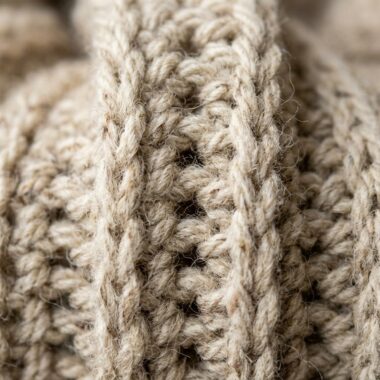
If you have ever admired the sophisticated, flat woven texture of artisan linen fabric and wondered if you could recreate it with a single ball of yarn and a hook, learning how to crochet moss stitch is your ultimate next step. Also celebrated by makers as the linen stitch or granite stitch, this rhythmic combination of single crochets and chain spaces produces a drape so fluid, flat, and reversible that you will want to use it for everything from heirloom baby blankets to modern kitchen textiles.
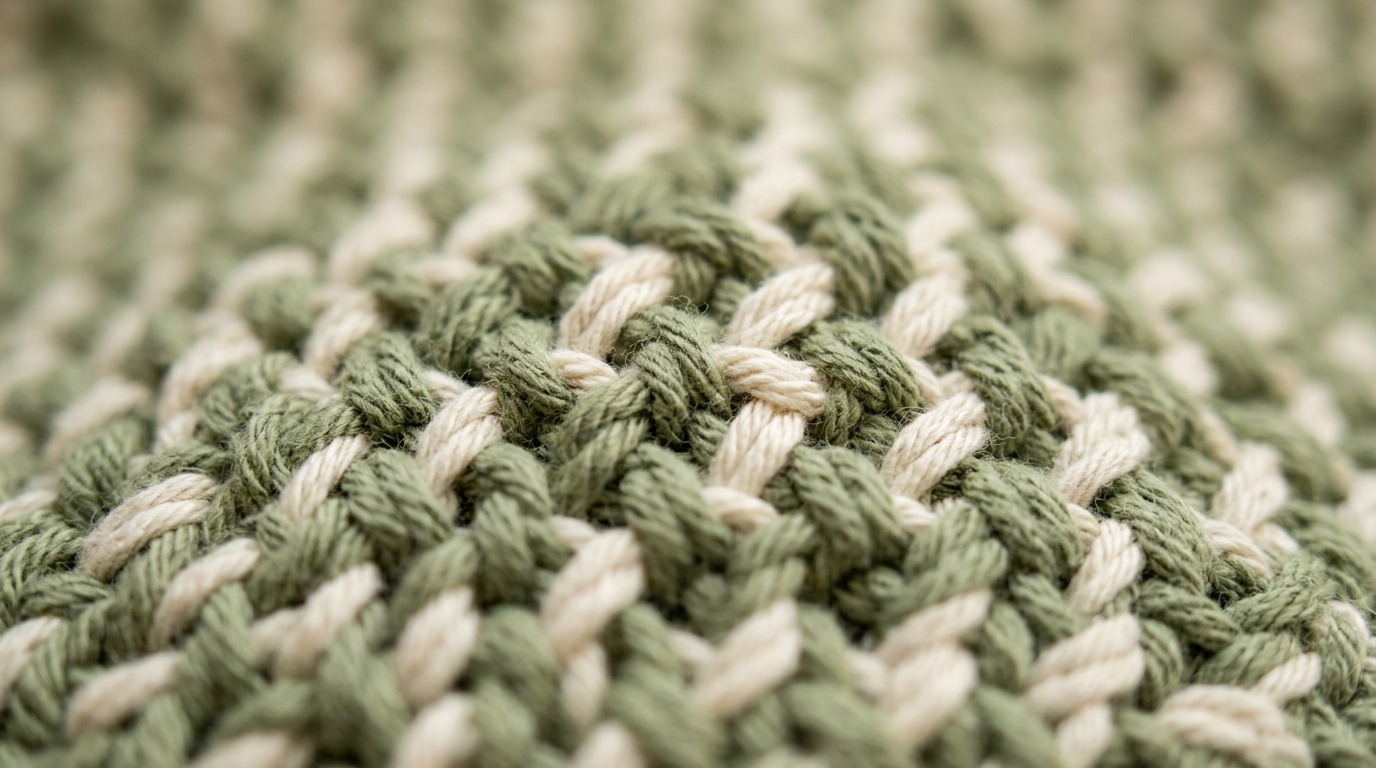
What makes the moss stitch uniquely addictive is its sheer mechanical simplicity. Rather than working into the tight, traditional V-loops of the row below, every single crochet is worked effortlessly into the open chain-1 space created in the preceding row. This clever offset stagger eliminates the rigid stiffness often found in standard single crochet, resulting in an elastic, lightweight fabric that resists curling and looks completely identical on the front and back.
Why You’ll Love the Moss Stitch
- 100% Reversible: Both the right side and wrong side boast identical, clean geometric ridges—making it the gold standard stitch for double-sided scarves and throws.
- Effortless Speed & Ergonomics: Inserting your hook into open chain spaces rather than tight loops significantly reduces wrist strain and allows for relaxed, meditative flow.
- Zero Edge Curling: Unlike stockinette-look stitches or dense solid rows, the moss stitch lies completely flat right off your hook without aggressive steam blocking.
- Incredible Colorwork Potential: Changing yarn colors every one or two rows creates striking houndstooth, pinstripe, or gingham color effects with zero complex tapestry carries.
Recommended Materials & Hook Sizing

- Worsted or Aran Weight Yarn: For learning the stitch and practicing crisp row transitions, a smooth 100% cotton or crisp acrylic in contrasting colors (such as sage green and cream) offers optimal stitch visibility.
- 5.0mm (US H-8) Crochet Hook: Always size up 0.5mm to 1.0mm from the recommended ball band gauge. Because the stitch relies on chain spaces, a slightly larger hook yields unmatched fluid drape.
- Locking Stitch Markers: Invaluable for beginners to mark the turning chain-2 and final chain-1 spaces so your rectangular borders stay laser-straight.
- Blunt Tapestry Needle & Sharp Scissors: For weaving in ends neatly along the dense horizontal ridges.
Step-by-Step Moss Stitch Tutorial
1. The Foundation Chain: Begin by chaining an EVEN number of stitches (e.g., chain 26 for a practice swatch or dishcloth). An even count ensures your beginning and ending edges balance symmetrically.
2. Setting Row 1: In the 4th chain from your hook, work 1 single crochet (SC). The skipped 3 chains count as your first single crochet plus a chain-1 space. Chain 1, skip the next chain on your foundation, and work 1 SC into the following chain. Repeat [Ch 1, skip 1 ch, 1 SC] all the way to the end of your chain. Turn.

3. The Core Pattern Repeat (Row 2 & Beyond): Chain 2 (this counts as your turning SC and Ch 1). Skip the first SC of the row. Work 1 SC into the very first Ch-1 space from the previous row. [Chain 1, skip next SC, work 1 SC into the next Ch-1 space]. Repeat across the row.
4. Finishing the Edge: At the very end of the row, work your final SC into the turning Ch-2 space from the previous row. This simple habit keeps your vertical borders perfectly straight with zero wavy bulges.
3 Pro Tips for Straight, Uniform Edges
1. Master the Turning Chain-2: Some tutorials recommend a chain-1 turn, but using a relaxed chain-2 gives the outer border enough height so the edges do not pull inward or pucker as the piece grows.
2. Don’t Skip the Final Space: The most common beginner error is missing the last stitch into the turning chain-space. If your project begins narrowing into a triangle, count your SC stitches—each row should have the exact same number of single crochets.
3. Keep Chain Tension Relaxed: Make sure your chain-1 stitches are not pulled tight. Matching the height of your chains to the natural height of your single crochets creates that coveted woven, linen-like grid.
Best Projects to Make with the Moss Stitch

- Durable Kitchen Dishcloths: Just like our farmhouse waffle stitch dishcloth, the moss stitch in cotton creates high-absorption, quick-drying washcloths.
- Heirloom Temperature Blankets: The dense 1-row height and low yarn consumption make the moss stitch the universal favorite for multi-colored year-long temperature blankets.
- Cozy Winter Accessories: Combine with our 1-hour chunky crochet infinity scarf techniques or explore our step-by-step waffle stitch tutorial for textured home projects.
Care, Washing & Blocking Guide
- Gentle Washing: Machine wash cold on delicate cycle or hand wash in lukewarm water with mild liquid soap.
- Flat Air Drying: Reshape gently while damp and lay flat on a clean dry towel. The moss stitch relaxes naturally into square alignment without pins.
- Steam Touch-Up: A light burst of steam enhances the woven drape of wool and acrylic blends immediately.
Crochet Moss Stitch (Linen / Granite) Reference Guide
By Elena Hayes • Category: Stitch Guides & Tutorials • Skill Level: Beginner
Abbreviations (US Terms)
ch: chain | sc: single crochet | sk: skip | ch-sp: chain space | st(s): stitch(es)
Step-by-Step Stitch Formula
- Foundation: Chain any even number of stitches loosely.
- Row 1: Sc in 4th ch from hook. *Ch 1, sk 1 ch, sc in next ch; repeat from * across to end. Turn.
- Row 2 (Repeat Row): Ch 2 (counts as sc + ch 1). Sk first sc, sc in first ch-1 space. *Ch 1, sk next sc, sc in next ch-1 space; repeat from * across, ending with 1 sc in the beginning turning ch-space of previous row. Turn.
- Repeat: Continue repeating Row 2 for desired length. Fasten off and weave in ends.
Frequently Asked Questions
Is the moss stitch the same as the linen stitch?
Yes! The moss stitch, linen stitch, granite stitch, and woven stitch are all interchangeable names for the exact same stitch formula: single crochet followed by chain 1, worked into chain spaces.
Does the moss stitch use a lot of yarn?
No! In fact, the moss stitch is known as a yarn-saver compared to solid single or double crochet because every other stitch is an airy chain space. It produces a lightweight fabric that uses approximately 15% to 20% less yarn than solid single crochet.
Why are my edges angling inward?
This almost always happens when the final single crochet is not worked into the turning chain-2 space at the end of each row. Place a locking stitch marker in your turning chain to ensure you never miss that crucial last anchor stitch!
Pin This Tutorial for Later
Save this step-by-step stitch guide to your Pinterest crochet boards so you always have the formula ready for your next project!