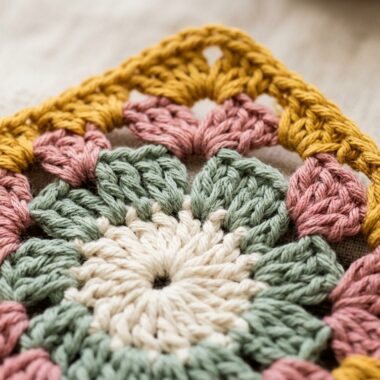
Few textures in crochet evoke the graceful elegance of vintage lace quite like the classic shell stitch. Characterized by gently fanned semicircular clusters anchored into single crochet valleys, this foundational stitch produces a scalloped, undulating fabric that looks wonderfully intricate while remaining astonishingly simple to execute. Whether you are looking to craft a breathable heirloom baby blanket, an airy summertime cardigan, or simply add a stunning scalloped border to an existing afghan, mastering the shell stitch is an indispensable skill for every crocheter.
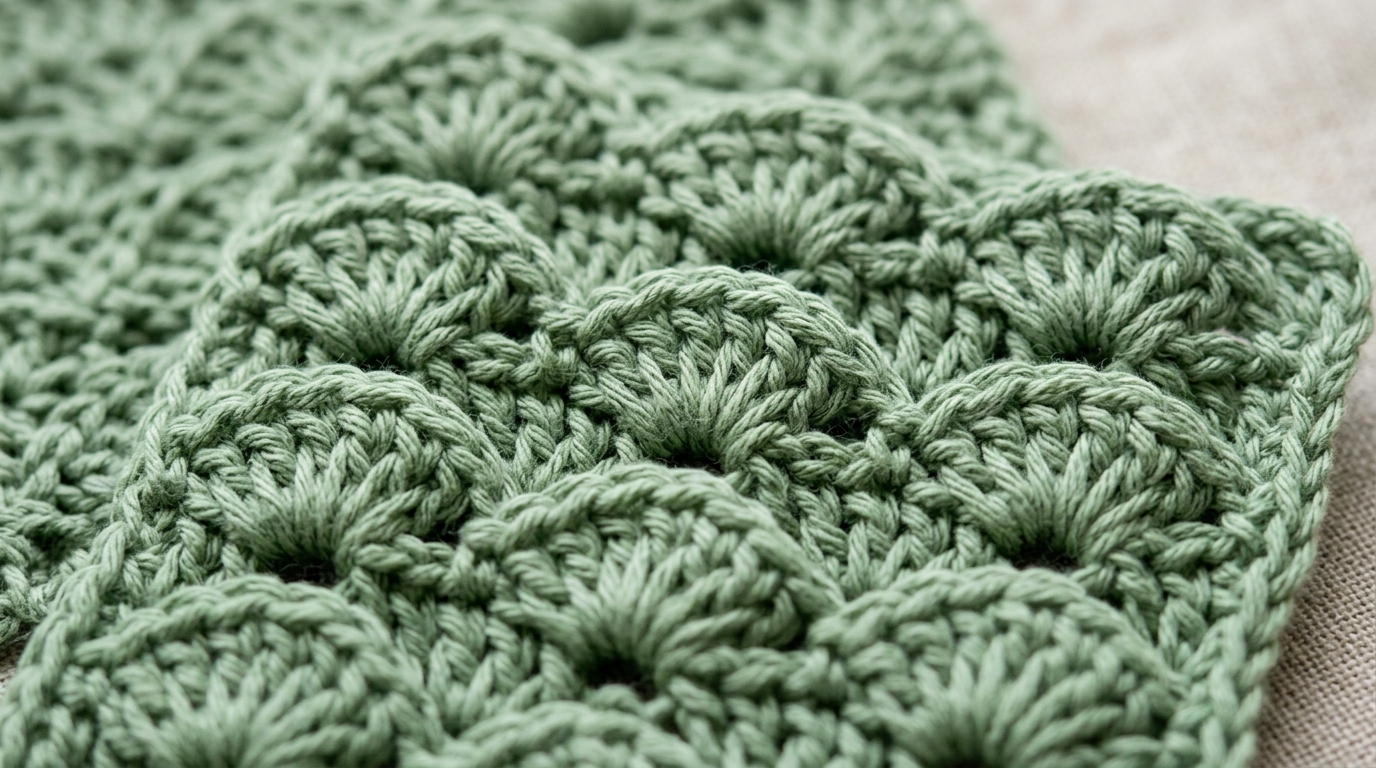
Unlike flat basic stitches that can feel monotonous across wide panels, the shell stitch naturally creates gentle peaks and troughs across every row. The magic lies in working five double crochets into a single designated stitch, which pushes the yarn outwards into an arched fan, before anchoring it back down with a compact single crochet. Best of all, once you establish your foundation row, every subsequent row simply alternates shells over valleys, making it an extraordinarily meditative repeat you can stitch without constantly glancing at a chart.
Why You’ll Love the Classic Shell Stitch
- Effortless 2-Row Repeat: Once your foundation row is anchored, the pattern repeats a single intuitive row rhythm that quickly becomes second nature.
- Reversible Fabric: Both the right and wrong sides look virtually identical, making it ideal for scarves, shawls, and baby blankets where both sides show.
- Natural Scalloped Edges: The top and bottom rows create organic wave borders without requiring any additional trim or edge treatment.
- Versatile Yarn Compatibility: Works gorgeously in delicate DK weight acrylics, lightweight linen blends, or chunky worsted kitchen cottons.
Materials & Stitch Specifications

- Yarn: Approx. 50 yards of Medium Worsted Weight (#4) Cotton Yarn for a generous practice swatch. We recommend smooth, plied cotton (such as Lion Brand 24/7 Cotton or Paintbox Cotton Aran) because crisp stitch definition makes learning the fans effortless.
- Crochet Hook: US Size 7 (4.5 mm) or H-8 (5.0 mm) bamboo or ergonomic hook. Choosing a hook with a slightly pointed inline head makes inserting into tight single crochet bases a breeze.
- Tapestry Needle: Large blunt eye yarn needle for weaving in beginning and ending tails.
- Scissors & Tape Measure: For checking gauge swatch width and clean cutting.
- Stitch Multiples: Work any multiple of 6 stitches + 1 (plus 1 for the foundation turning chain). For example: (6 x 4) + 1 + 1 = 26 starting chains.
- Skill Level: Confident Beginner (uses basic Chain, Single Crochet, and Double Crochet).
Crochet Abbreviations & Stitch Anatomy (US Terms)
- ch: Chain stitch
- sc: Single crochet
- dc: Double crochet
- sk: Skip
- st(s): Stitch(es)
- Classic Shell: 5 double crochet stitches worked into the exact same single stitch
- Half Shell (Edge Shell): 3 double crochet stitches worked into the edge turning stitch to keep sides straight
Step-by-Step Shell Stitch Walkthrough

Row 1: The Foundation Scallops
1. Starting Chain: Chain 26 (or any multiple of 6 + 2).
2. First Base: Work 1 sc into the 2nd chain from your hook.
3. First Shell: *Skip 2 chains. In the next chain, work 5 dc all into the same chain stitch (first shell completed). Skip 2 chains. Work 1 sc into the next chain.*
4. Repeat Across: Repeat from * across the foundation chain until you reach the end. Your final stitch will be a single crochet worked into the very last chain. Turn work. (You will have 4 full shells and 5 single crochets).
Row 2: Staggering the Fans (Half Shells on Edges)
1. Edge Turning: Ch 3 (counts as your first dc). Work 2 dc into the very first sc at the base of the ch-3. (This creates a 3-dc half shell to maintain straight, even edges).
2. Valley Anchor: Skip 2 dc of the shell below. Work 1 sc directly into the 3rd (center) dc of the shell below.
3. Shell Repeat: *Skip 2 dc. In the next sc between shells, work 5 dc (full shell). Skip 2 dc. Work 1 sc into the center (3rd) dc of the next shell.*
4. Ending Half Shell: Repeat across until the final sc. In the very last sc of the row, work 3 dc (half shell). Turn work.
Row 3: Full Shell Alignment (The Main Repeat)
1. Starting Anchor: Ch 1, work 1 sc into the very first dc at the base of the chain.
2. Shell in Valley: *Skip 2 dc. Work 5 dc in the next sc between shells. Skip 2 dc. Work 1 sc in the center (3rd) dc of the next shell.*
3. Repeat Across: Repeat from * across the entire row. Your final sc will be worked into the top of the turning chain-3 from the previous row. Turn work.
Row 4 and Beyond: The Continuous Pattern
Simply repeat Row 2 and Row 3 alternately until your piece reaches your desired project length! Ending on a Row 3 leaves you with full, uniform scalloped fans along the top border.
3 Chef Secrets for Flawless Shell Stitches
1. Always Anchor in the Center Stitch: When working your single crochet into the shell below, count carefully: it must go into the exact 3rd double crochet of the 5-dc cluster. Anchoring off-center will slant your shells and skew your project edges.
2. Loosen Your Starting Chain: Foundation chains that are pulled too tight will cause the bottom edge to bow inward like a crescent moon. Use a hook one size larger (e.g., 5.5mm) purely for the foundation chain, then switch back to your 4.5mm hook for Row 1.
3. Steam Block for Dramatic Scallops: Acrylic and wool fibers hold shell scallops beautifully when given a light steam blocking. Pin your scalloped points along a blocking mat and hover a steam iron 2 inches above the fabric without touching the yarn. The fans will instantly bloom into open, relaxed lace.
What to Make with the Shell Stitch

The gentle, feminine drape of the shell stitch lends itself to countless gorgeous home and wearable creations:
- Heirloom Baby Blankets: Work in soft pastel acrylic or washable bamboo yarn for a lightweight, breathable crib blanket with built-in wavy edges.
- Decorative Scalloped Borders: Add a single round of shell stitches around plain double crochet dishcloths, placemats, or fleece blankets for an instant artisanal finish.
- Lace Summer Shawls & Scarves: Pair fingering weight silk or mohair yarn with a 4.0mm hook to create a fluid, shimmering evening wrap.
- Cottagecore Pillows & Cushions: Stitch two identical shell squares and seam three sides around an accent pillow form for vintage farmhouse charm.
Frequently Asked Questions
Why are my side edges getting wider or narrower?
Uneven edges happen when crocheters forget that Row 2 begins and ends with a 3-dc half shell, while Row 3 begins and ends with a single crochet. Pay close attention to your turning chains and ensure you work into the top of the turning ch-3 on every alternate row.
Can I make a shell with more or fewer double crochets?
Yes! A 3-dc shell creates a more subtle, delicate wave, while a 7-dc shell produces dramatic, deep scallop ruffles. Adjust your skipped stitches accordingly (skip 1 chain for 3-dc shells, or skip 3 chains for 7-dc shells).
Is the shell stitch a yarn eater?
Because you are packing five double crochets into a single stitch, the shell stitch uses slightly more yarn than standard double crochet rows, but significantly less yarn than dense textured stitches like bobbles or waffles.
Pin This Tutorial for Later
Love this stitch tutorial? Save this pin to your Crochet Stitches & Tutorials board on Pinterest so you have it ready for your next project!